Showing posts with label kindle blogs. Show all posts

Wednesday, January 12, 2011

Eeek! Snakes on a Plate!

How the Latest Health “Solutions” Are Like a Comedy Turned Scary!
By James J. Gormley
its-a-mad-mad-mad-mad-world126967837995133 When I was a kid, one of my “absolute favorite” movies was Stanley Kramer’s madcap 1973 comedy, It’s A Mad Mad Mad Mad World.

When I first saw it on CBS in 1978, I loved the antic chaos, the slapstick stunts and the total zaniness of the movie --- hard to not be a sillifest when you have the likes of Milton Berle, Sid Caesar, Ethel Merman, Mickey Rooney and Jonathan Winters, to name only a few of the comedic greats who graced the celluloid of this film.

What does this have to do with health freedom or health politics? Well, unfortunately: plenty.

In fact, America seems to be in the midst of an unprecedented convergence of varied and sundry strange health “solutions” that are no less wacky than Kramer’s cinematic masterpiece but, unfortunately, not funny … and also rather horrific.

Here are a couple of the latest “strange but true” ideas that would be laughable if they weren’t attracting widespread media attention --and even some supporters!

Food from cloned cattle or cloned meat grown in vats
According to Spence Cooper in a
blog post on FriendsEAT.com:  “Recent news reports indicate some U.S. cloned cattle have been created from the cells of dead animals […] And since the U.S. approved cloning over two years ago, you may have already grilled a cloned steak this summer from beef cells extracted from a dead carcass.”

Approved by the U.S. Food and Drug Administration (FDA) in January 2008, the alleged purpose of using the technology would be to improve the taste or “quality” of meat and milk that we all consume every day. Because of the cost of cloned cows ($15-20,000 a cow), it is predicted that the offspring of cloned animals will be used (or consumed), not the clones themselves.

Small consolation that. When even the farmers are against something like this, you know it must be really bad. In a written statement at the time, the National Farmers Union said: “Consumers have the right to know if the food they feed their families comes from a cloned animal.”

In addition to ethics, the “right to know” is really what it boils down to: labeling and for consumers being able to make informed choices as to whether they are buying food from clones, cloned offspring, GMOs or what have you, although labeling will most likely not be required.

As I wrote in a Nutrition Industry Executive article, in December 2006, entitled “The FDA’s Strange New World,” the FDA had begun campaigning for cloned animals as early as 2001. In the January-February 2001 issue of FDA Consumer, an FDA writer enthused: “Transgenics can turn animals, such as cows, sheep and goats, into pharmaceutical factories.” Gee, isn’t that a reassuring dream?

“Should there be any limits as to how far we as a species can go in manipulating the fabric of life?” I asked in Better Nutrition magazine back in October 1997. “Or should we, like Dr. Frankenstein in Mary Shelley’s nightmare, proceed with the ultimate arrogance that nature is not only up for our unlimited exploitation but for our boundless tinkering, as well?”

mcstatin image Statins with that burger?
In a paper that ran in The American Journal of Cardiology,   Dr. Darrel Francis and colleagues from Imperial College London (U.K.) suggest that giving out statin drugs to people at fast-food restaurants will help reduce heart disease risks caused by the fat-drenched meals.

The British Heart Foundation (BHF), which funded the study, is none too pleased with the suggestion of the “MacStatin” that the authors propose. In a BHF blog post by Dr. Mike Knapton, the foundation says:

“Promoting a pill for junk food would lead us towards medicalizing a huge swath of our population when really people need to take more responsibility for their own health.”
 
In the Cardiology article, the authors write: “We envisage a future in which fast food restaurants encourage a holistic approach to healthy eating. On ordering an unhealthy meal, the food will arrive labeled with a warning message […] and on the tray, next to the ketchup, will be a new and protective packet, ‘MacStatin,’ which could be sprinkled onto a Quarter Pounder or into a milkshake.”

Indeed.

If that represents a “holistic approach,” then I imagine the authors have a bridge to sell me, or to themselves.

Gormley Take-Away: I envisage a future in which food is food --- not grown in Franken-vats or derived from cloned animals or plants or spiked with statin drugs or any other pharmaceutical. I hope that we all can work toward such a tomorrow and that we can leave the comedies and fright-fests to the movie makers, not on our plates.

Monday, January 10, 2011

Setting the Record Straight About Dietary Supplements

By James J. Gormley

Pick up any newspaper, snap on the radio, glance at the TV --- and you’re sure to be hit by the latest “news” about dietary supplements: how they don’t work, how they’re all tainted with contaminants and laced with pharmaceuticals; and how their manufacturers are out to get us!

The truth, however, is far more reassuring than the headlines make out. google ds search Go ahead, Google “dietary supplements” with the name of any of the big networks or newspapers, anything from ABC News to the Chicago Sun-Times or CNN, you name it.

I did: and in top search listings for seven of the country’s leading newspapers and five of its major networks, nearly 70% of the coverage is skeptical and cautionary about dietary supplements.

In fact, if we were to believe mainstream media, not since 1866, in Liberty, Missouri, when the James-Younger Gang’s Wild West rampage of robberies and mayhem began, did we see such a lawless frontier as we supposedly have today in the dietary supplement marketplace.

We know, though, that the Wild West ended in 1890 and that over-the-counter drugs (not supplements) are actually the successors of the Traveling Medicine Show patent medicine tradition.

Real Dangers, Supplements Benefits Overlooked
In fact, our self-appointed guardians of public health (whether wielding Senatorial powers or using a journalist’s pen) almost always forget to discuss those tablets and capsules that are profoundly dangerous and largely toxic: prescription drugs. Each year, prescription drugs injure approximately 2.2 million and kill at least 100,000 Americans.

With about 33,000 dietary supplements on the U.S. market, it’s no surprise that with today’s nutritionally bankrupt diet there were 192 million Americans using supplements, a number that is expected to keep growing.

According to the Council for Responsible Nutrition (CRN), “These products are intended to be used as supplements to, not substitutes for, a well-balanced diet and a healthy lifestyle.” In addition to wanting to provide a basic nutritional “insurance policy” offered by a multivitamin, people take nutritional supplements for a variety of health-promoting reasons.

In a survey conducted by Yankelovich Partners and commissioned by the Natural Products Association, seven out of 10 Americans take supplements because they make them feel better.

So, if supplements are so popular, and good for us, why, we ask, are they getting such a bum rap? Good question.

Feeding the undeservedly bad reputation is a confluence of several factors, including: historically poor government enforcement against a small number of fringe operators; general misunderstanding of how well-regulated the dietary supplement industry actually is; and media feeding frenzies related to high-profile cases that have little, or nothing, to do with the dietary supplement industry, aside from actually showing the regulations effectively working.
Facing Facts
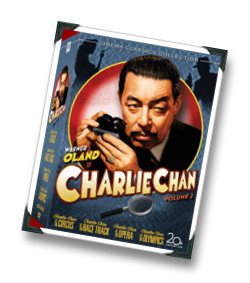
Whenever I hear the term, I invariably think of Warner Oland, in those 1930s-era Charlie Chan movies saying, “You must face facts.”

Sometimes I wish we could bring Oland back (minus the political incorrectness) so Chan could face the bad guys — or in this case the purveyors of untruth — with all of the bald-faced facts that our panel touched on.

But that can’t happen, so it’s up to all of us to be myth-busters on a daily, or weekly or monthly basis — so that one day our guardians of public health will have no choice but to acknowledge what we already know: the power and promise of safe dietary supplements that are produced by a responsible, well-regulated dietary supplement industry: in other words, the facts.

It’s time that conventional researchers begin to design studies that build on vitamin research of the last 50 years rather than attempt to poke holes in what we already all know: vitamins promote health, reduce disease and help people live longer … and better.

Saturday, January 08, 2011

Medical futility .... or failure to hope?

By James J. Gormley

Some years ago there developed a movement of people who wanted to convince society that doctors could decide whether to withhold, or withdraw, treatment for very sick, or "terminal," patients, "even over the objections of a competent patient."

The movement peaked in 1995 when 134 articles on the topic were published. Between June 1st 2006 and June 1st 2007, there were 75.

In 1992, in an article in the journal, Healthcare Ethics, the authors argued that "complete respect for patients' autonomy reduces the physician from a moral agent to an extension' of the patient's wishes."

God forbid!

Physicians are not moral agents. They are support staff in the job called "health." Mentally competent patients, and their immediate families, are the "moral agents. "

What bothers me is the presumption that care should be rationed for those of us who are the sickest, and moreso, that there's an outrageous assumption that because toxic drugs and invasive surgery (heroic measures) aren't working, then that means that "medicine" can do nothing else for this person.

Clearly, so-called "alternative" healing systems, such as Ayurvedic, Tibetan and Traditional Chinese Medicines, have been providing hope to people for over 4,500 years.

It would seem that mainstream medicine, then, is the "alternative," or new kid on the block. Since "medicine" encompasses so many valid healing systems, we cannot say that medicine has failed.

What has failed is hope. What has failed are the drugs and surgery. What has failed is our capacity to imagine. To imagine a totally different approach.

To imagine vibrant health. To pray. To go outside the bounds of an illness care system that has admitted defeat: medical futility.

An author on the topic wrote, "Talking to patients and their families should remain the focus of our efforts."

How true that is.

Thursday, January 06, 2011

New Year, New You!

By James J. Gormley

New Year’s means change. It also means tradition, or that which doesn’t change.

Guy Lombardo
When I was little, the night of December 31st was not New Year’s Eve until I sat down with my parents to watch Guy Lombardo and His Montreal Canadians. It wasn’t New Year’s until my grandmother reminded me to put a shiny quarter out on the windowsill so that the new year would be prosperous, or until the ball dropped in Times Square.

There was no “Rockin’ New Year’s Eve,” and definitely no televised California New Year’s with fake snow and people jumping up and down for the cameras, screaming at 9:00 p.m. Pacific Standard Time.

New Year’s Eve was not always celebrated with drunken revelry and blasts from toy horns, however. In ancient times, and even in some mainstream religions today, the New Year is a time for reflection on the past and hope for the future.

New Year’s, today, can be a curious mixture of the old and the new, the completed and the yet to be. As we usher in this new year, let’s not feel like powerless beings swept along by the unrelenting forces of time.

Let’s embrace the New Year and its challenges. Whatever changes we are faced with, we can be the rulers over our lives. We can transform tragedy into positive energy. We can go forward, then, with a new perspective or a new appreciation for life, itself, and all that which makes it worth living.

Each of us has within ourselves the capacity for change, the capacity for (and right to) happiness and the power to take charge of our lives.

Let’s tap into these energies now, as we enter this new year.

Wednesday, January 05, 2011

‘Supplements Are Safe, Healthful and Well-Regulated’!

By James J. Gormley
good_day_ny[1] On March 25th, 1999, I was part of a live television debate on FOX-TV’s “Good Day New York” with a drug industry attorney on the topic: “Are dietary supplements regulated?”(1)

Needless to say, with all of the facts showing how well regulated dietary supplements were then, winning the debate was not a difficult accomplishment; I even had the host, Jim Ryan, on the side of supplement consumers about midway through the segment.

In fact, the regulations and laws governing nutritional supplements in 2011 are even more stringent than they were in 1999, when I did that show.

According to attorney Peter Barton Hutt, the “bedrock food safety requirement that has been the foundation of the American food supply since 1906 — the prohibition of poisonous or deleterious substances in food—applies equally to dietary supplements and conventional food” (2).

Supplements: A Super-Regulated Category
Today, dietary supplements have the following requirements and controls over them:
  • Pre-market notification to the U.S. Food and Drug Administration (FDA)—not required for drugs or medical devices.
  • Labeling.
  • Mandatory adverse event (side effect or reaction) reporting to the FDA (not required for foods).
  • FDA Good Manufacturing Practices (GMPs).
  • Facility registration (for the FDA).
  • Advertising (by the U.S. Federal Trade Commission).
fda-logo[1] In fact, broadly speaking, the laws governing supplements under the umbrella of the Food Drug and Cosmetic Act (FD and C) are: the Nutrition Labeling and Education Act of 1990 (NLEA); the Dietary Supplement Health and Education Act of 1994 (DSHEA); the Bioterrorism Act of 2002; the Food Allergen Labeling an Consumer Protection Act of 2004; the Dietary Supplement and Non-Prescription Drug Consumer Protection Act of 2006 (AER Law); and Federal GMPs.

Regarding dietary supplements, the FDA has significant powers, including (but not limited to) the authority to:
  • Stop a company from selling any dietary supplement that is unsanitary or unsafe.
  • Stop the sale of any dietary supplement that makes false or non-substantiated claims on its labeling.
  • Stop the sale of any nutritional supplement that poses “a significant or unreasonable risk of illness or injury.”
  • Block a new dietary ingredient (NDI) from being marketed if the agency does not receive enough safety information in advance.
federal-trade-commission-ftc-logo_jpg Likewise, the FTC has a great deal of surveillance and enforcement powers that it uses for dietary supplements, including the ability to: challenge and stop advertising that is not sufficiently substantiated; negotiate a consent order for a company to change or fix its promotional, marketing or advertising practices; and to seek substantial civil penalties for violations of trade regulation rules or violations of cease and desist orders. 

mass media is unregulated0001 So Why Do We Keep Hearing About Supplements Being Unregulated?
Part of the problem is the media.
As I noted way back in 1999 (1), despite powerful and authoritative research underpinning many of the most popular supplements today, the mainstream media appear to be on a planet where this research is unavailable or incomprehensible.

The FDA itself has also been stoking the misinformation fires about the supplement regulations that it is mandated to implement and enforce. As I noted in July 2009, “The FDA should cooperate with the responsible core of the natural products industry rather than criticizing the very laws that the American people saw fit to pass and which the FDA is sworn to uphold and enforce” (3).

Dietary supplements have “always been regulated as a category of food in this country, and DSHEA did not change that,” according to the Council for Responsible Nutrition (CRN) (4).

“Dietary supplements are not regulated as drugs because they are not drugs,” added Jeffrey Blumberg, PhD, FACN, director of the Antioxidants Research Laboratory at the Jean Mayer USDA Human Nutrition Research Center on Aging, at Tufts University (3).

According to Hutt, it is “apparent that FDA has adequate statutory authority to assure the safety of both dietary ingredients and conventional food ingredients” (2).

In fact, Hutt adds that the “safety provisions under the FD and C Act applicable to dietary supplements would appear to be stronger than those applicable to conventional food.”

‘Supplements Are Safe, Healthful and Well-Regulated’ may not be a very “sexy” story title as they go, but it is one that really should be front-page news.

Gormley Take-Away: Given all of the recent drug recalls and food contamination outbreaks, I would be much more concerned about the safety of pharmaceuticals and conventional foods than about dietary supplements if I were the average consumer advocate, legislator or reporter. Looking at the powerful safety record of dietary supplements, now officially demonstrated via the AER Law, I would consider beating a different drum than the one associated with unwarranted and uninformed attacks on supplements.

REFERENCES
1. Gormley J. Mass media is unregulated [Editor’s Desk]. Better Nutrition. August 1999.
2. Hutt PB. FDA Statutory Authority to Regulate The Safety of Dietary Supplements [White Paper]. Covington and Burling, June 6, 2003.
3. Gormley J. Making the ‘cut’: What the latest recall tells us … and doesn’t. The Gormley Files. July 21, 2009.
4. Council for Responsible Nutrition. Dietary supplements: Safe, beneficial and regulated. Revised December 2009. Accessible at: http://www.crnusa.org/CRNRegQandA.html

Sunday, January 02, 2011

Escape from the Emergency Room

By James J. Gormley

I realized one day that I had a medical "situation," a male concern I had wondered about for a couple of months, yet had dealt with via the time-honored male tradition of "avoidance"-- if I pretend everything's okay, the problem will go away -- not exactly the best approach.

Scared about cancer, I sat down with my wife. We resolved to speak with a physician friend the next day, which I did. I was told: "Get thee to an emergency room," in no uncertain terms.

Wracked with fear, I stepped into an emergency room in the Bronx, where I live, and I was shocked. Before me were hundreds of people waiting to be called -- victims of a world without a family doctor, statistics at the periphery of an HMO universe.

There was no hope in this room. Only desperation. Only sickness. Only pain. The room was dark and filthy, the staff looked shell-shocked, and the triage "window" was a l-inch-thick bulletproof barrier.

My heart sank. I felt a ball of worry in the pit of my stomach. I telephoned my car-service friend, Marvin, and asked him to pick me up and drive me to a hospital in Manhattan, one regarded as one of the finest medical institutions in the world.

When the cab drove in along the graceful, flower-lined driveway, I thought that I was pulling up to a Hamptons dinner party, not to a place of X-rays and blood. There were only a couple of people waiting in the immaculate, "elegant" waiting room. I thought, "Now I'll be safe. Now I'm in good hands. "

Or not? The triage nurse ignored most of my questions, and I wound up in a room within the bowels of the E.R. Freezing in a hospital gown, I was examined by a surgeon who was compassionate yet overworked. He informed me that I would need ultrasound testing, and that a urologist would have to see me.

After he left, a nurse ordered me to vacate the room, since they needed it for an "eye injury." I painfully climbed down (without a step-stool) and found myself, ignominiously, having to climb up onto a stretcher in the hallway.

About 2 hours went by before transporters came to bring me to ultrasound. When I was brought back to the E.R., I was deposited in a wheelchair and forgotten.

When my meal arrived (for which I had to practically beg), the urologist intern showed up: 7 hours after I arrived, 4 hours after the ultrasound. He was very vague, and just didn't seem to care. He promised to give me the names of three urological surgeons, and sent me back to the nurse's station, where I waited another hour for my discharge instructions, which I could barely read.

When asked by one of the night-shift nurses, "Who was your nurse?," I told her that I had no idea -- that no one (except for the surgeon) had bothered to give me a name, or ask me if I was okay, or if I needed a sip of water ... anything at all.

When I sit back, and try to process what this experience taught me, I'm left with this thought: It represents the very worst and the very best of what's horribly wrong and allegedly right about mainstream medicine today. It's high-tech but "low-heart," the apex of empirical skill yet the nadir of compassionate medicine.

In 1975, Ashley Montagu said, "One goes through [...] medical school and one's internship learning little, or nothing, about goodness, but a good deal about success."

Pity that goodness needs to be taught, and sad that this is a definition of success.

Is it any wonder that holistic medicine holds the key?
 
The Gormley Files - Blogged