And by "she" I am referring to my editorial alma mater, Better Nutrition magazine, where I proudly served as editor in chief from 1995 to 2002, which is celebrating its 75th anniversary beginning with the August 2013 issue.
Better Nutrition has
always stayed true to its mission and has constantly worked very hard to never
let down its readers. It has a unique and trustworthy way of getting into
people’s hands, too, via consumers’ favorite health-food stores.
 |
| James Gormley's "Earth Watch" column in 1995 |
The
magazine has never been afraid to be out first on issues of great importance to
its readers, whether breaking an environmental health story about the dangers of
the Yucca Mountain nuclear waste repository (‘Physicists warn: nuclear
waste-site dangers exist,’ September 1995), or a commentary on nutritional
genocide (‘Iodine deficiency in China --- a crucial lesson for the U.S.’, August
1996), or an editorial in total support of St. John’s wort when most media
outlets were publishing unfounded hit pieces (‘St. John’s wort is safe,’ June
2000).
With
its editorials and its articles, Better
Nutrition also helped re-popularize integrative medicine in the U.S. and
was on the vanguard of the successful fight (between 1997 and 1998) to force
the USDA to propose new USDA Organic standards that adhered to the right
principles.
The magazine has also never shied away from publicly defending the science and safety behind dietary supplements, whether in testimony I had an opportunity to deliver at the New York City Council ephedra hearings in 2000 or when I had a chance to "take on" pharma industry attorneys on FOX-TV’s ‘Good Day New York.’
The magazine has also never shied away from publicly defending the science and safety behind dietary supplements, whether in testimony I had an opportunity to deliver at the New York City Council ephedra hearings in 2000 or when I had a chance to "take on" pharma industry attorneys on FOX-TV’s ‘Good Day New York.’
Better Nutrition
was the first health and nutrition magazine to commit to a rigorous focus on
science in all of its reporting, an approach that was later emulated by other
magazines. In addition, the magazine has been part of a movement that changed
the nation’s mind-set from ‘5-a-day’ and mainstream ‘healthcare’ to optimal
nutrition and integrative health.
The
magazine has also never been afraid of getting personal, either, whether the
topics were fear, the inspiration of Patch Adams, happiness, hope or
thankfulness. In fact, readers have consistently shown their appreciation for Better Nutrition articles that inspired
them, encouraged them or gave them hope.
 |
| James Gormley's "Editor's Desk", 1999 |
In
July 2001, a reader from Mission Hills, Kansas, send in a card about the
February 2001 commentary, which was entitled, ‘Never stop dreaming.’ His card,
which I have kept on my own bulletin board for the last 12 years, reads: ‘I
want to congratulate you on a most wonderful editorial, ‘Never stop dreaming.’
It is kept at my desk as a reminder to stop and look up. Thank you for putting
a simple thought into words.’ ”
 |
| James Gormley's "Editor's Desk," 2001 |
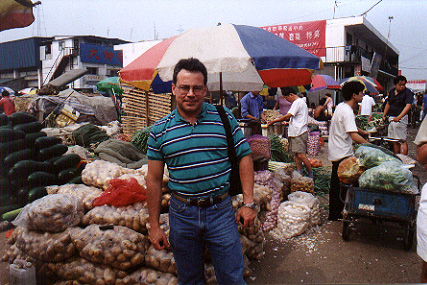
Better Nutrition gave me the chance to learn quite a lot about nutrition: where we are, where we should be, and what can help get us there nutritionally. I’ve had such amazing opportunities, too, to learn and grow, including a press trip to China in 2001, a life-changing experince that I will never forget.
I have met so many caring and committed health-food retailers over the years, people who are truly on the front lines of health freedom.
It’s given me the chance to learn about the regulations which support our right to high-quality, high-potency and innovative dietary supplements and about the political and economic forces which are taking aim at those rights, one of the reasons I decided to write Health at Gunpoint.
I am thankful to editor-in-chief of Better Nutrition today, Nicole Brechka, who gave a shout-out to me in the anniversary issue's editorial and to Vera Tweed in her history of the natural products industry this same issue.
 |
| Vera Tweed, Better Nutrition, August 2013 |
From the bottom of my heart, I wish Better Nutrition another 75 groundbreaking, conscious-raising years
of commitment and service to American consumers and the health-food stores
where they shop!


 Posts
Posts