By James J. Gormley
If you ever were in a hospital awaiting surgery, have you had a nurse or doctor shake your hand while wearing rubber gloves?
I have. It’s one of the least comforting, while most impersonal and sterile, human exchanges that I have experienced.
Are germs today that much more rampant than when I worked on medical-surgical units in a New York City hospital between 1984 and 1988? In those days, latex gloves were only routinely worn when unconscious, geriatric or injured patients were being changed and when actual medical or surgical procedures were being performed.
America’s obsession with germs has certainly grown since then, however, as we have seen with how popular culture has been gripped by microbial madness.
In 1995, two major killer germ movies were released, Twelve Monkeys (a sci-fi thriller in which 99 percent of the Earth’s population has been wiped out by an unknown and deadly virus) and Outbreak, a modern-day fright flick about the Ebola virus.
Following the anthrax scare and the September 11 attacks in the US in 2001, at least two books came out the next year capitalizing on our fears: Killer Germs: Microbial Disease that Threaten Humanity and Secret Agent: The Menace of Emerging Infections.
If you add these dark visions to the real rise of antibiotic-resistant bugs, including methicillin-resistant Staphylococcus aureus (MRSA) bacteria, surely there are reasons for concern: real and imagined.
Now while I would not want to dispute the critical importance of the development of the Germ Theory of Disease that was discovered and developed by such scientists as Semmelweiss, Pasteur, Lister and Koch, I am greatly concerned that modern society has apparently transformed our view of germs—those we have always lived with and newer varieties to which we have inadvertently given rise—into an “us vs. them” paradigm, a War on Germs version of the War on Terror (not to even mention those cases in which these wars overlap).
With today’s ubiquitous latex gloves and viral spread of potent hand sanitizers, our evolutionary relationship with germs has been, it seems, left behind … or sanitized away. So has common sense, apparently, along with it the simple virtue of the type of vigorous hand-washing (with good old soap and water) that was always encouraged by our parents and grandparents.
Mark Morford once wrote in the San Francisco Chronicle that our nation’s desire to create a sterile world is fraught with larger health and social risks.
He quoted Slate’s Kent Sepkowitz as arguing that, “far from not cleaning, cooking and irradiating our food well enough and far from not ensuring we have the correct FDA precautions, we as an over-pampered culture are probably not getting enough nasty buggy, immune-system-boosting microbes in our diet, in our meats, in our mouths.”
Morford spoke of the true dangers behind an “alarmist, germophobic mindset that insists on sanitized, overcooked ultra-safe bleached-out everything then grows and mutates and extends well beyond the toilet and the kitchen and the backyard and the human gut, straight into human experience as a whole, resulting in one horribly bland, edge-free, prefab life.”
He has a point.
Perhaps a better approach would be to seek germ balance, or bacterial balance, acknowledging that all of life operates with, and within, a series of processes that are constantly in flux — whether we are talking about probiotics and pathogenic bacteria, proper immune response and excessive immune response (which we call allergy, asthma, etc.) or good germs on our skin and the germs that we would much prefer be transient visitors.
What is clear is that almost every global effort to sanitize ourselves and our world has created real and potential health consequences: whether antibiotic resistance and probiotics’ destruction through over-prescription of antibiotics, unwanted byproducts through food irradiation or toxins through the breakdown of certain hand-sanitizer ingredients.
As an arguably enlightened society, we have a unique opportunity to offer solutions which are informed by a more balanced view of health and ecological (including microbial) balance and not feed into the various hysterias that currently plague us.
Showing posts with label amazon kindle blogs. Show all posts
Showing posts with label amazon kindle blogs. Show all posts
Sunday, January 09, 2011


Friday, January 07, 2011
Ribbonless Presents, Unwrapped Gifts
By James J. Gormley
Now that the holidays are over, it’s worth remembering that gifts don’t always come in shiny red paper with bright golden ribbons. One of the first gifts I received from my parents had no holiday packaging at all.
On cold winter nights, when I was two, my father, whom I would call Papa, and later “Pa,” would lie awake on the floor next to my crib to comfort me when I would awaken with a bad dream. That’s what a father is; that’s who my father is.
 I remember so many special times with my father and mother from my childhood. Me inside the shopping cart Pa pushed up the hill to the A and P. My father telling me the stories about how he and his father, the Old Man, would drive the horse-and-carriage along the Boston Post Road, in Mamaroneck, N.Y., before there were cars. Pa gently singing “All the Kings Horses and All the Kings Men” to me as a bedtime lullaby. Playing catch at Bowne Park in Flushing, N.Y., where I grew up. Walking Rexie, my dog, along the tracks of the Long Island Railroad.
My father and mother gave me so many things, ribbon-less presents that I can never reciprocate. Priceless gifts of love, time, caring, wisdom and so much more. I hope Pa knows and Ma knew how special they have always been to me, even if I haven’t always shown it.
Now that the holiday season is over, remember that exchanging presents isn’t the only way to show appreciation to the people who have made a difference in your life. Your gifts to them don’t have to be fancy or trendy or expensive or wrapped in shiny red paper with bright golden ribbons.
Offer them your gratitude to honor, in a small way, all of the many unwrapped gifts they have given you.
Now that the holidays are over, it’s worth remembering that gifts don’t always come in shiny red paper with bright golden ribbons. One of the first gifts I received from my parents had no holiday packaging at all.
On cold winter nights, when I was two, my father, whom I would call Papa, and later “Pa,” would lie awake on the floor next to my crib to comfort me when I would awaken with a bad dream. That’s what a father is; that’s who my father is.

My father and mother gave me so many things, ribbon-less presents that I can never reciprocate. Priceless gifts of love, time, caring, wisdom and so much more. I hope Pa knows and Ma knew how special they have always been to me, even if I haven’t always shown it.
Now that the holiday season is over, remember that exchanging presents isn’t the only way to show appreciation to the people who have made a difference in your life. Your gifts to them don’t have to be fancy or trendy or expensive or wrapped in shiny red paper with bright golden ribbons.
Offer them your gratitude to honor, in a small way, all of the many unwrapped gifts they have given you.
Tuesday, January 04, 2011
Which is the real bioterrorism?
By James J. Gormley
Recently, I was thinking about the many ways in which nature's balance and our bodies are thrown off kilter by toxins,allergens and disease.
Many of the imbalances are the result of a complex web of disastrously irrational environmental and industrial policies. In most cases, however, the poisoning of our world is not generally considered wantonly malicious, in the strictest sense of that term.
In general, we try to deal with these assaults on our bodily systems' living order (homeostasis) by attempting to purify the body — by identifying toxins and allergens and reducing our exposure to them, supporting the liver and cleaning up the diet.
However, in a post 9/11 world threatened, or haunted, by the specter of biological and chemical warfare, it was not without a degree of trepidation that I happened upon an old article in the New England Journal of Medicine, entitled "Mass Psychogenic Illness Attributed to Toxic Exposure at a High School."
 Although the word "psychogenic" is a tip-off that the authors concluded that people were imagining things, I was very curious as to what went on.
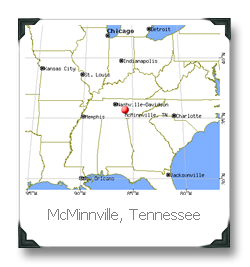
Apparently, in November 1998, a teacher at a high school in Tennessee smelled a gasoline-like odor in her classroom. Then she, and others, began to experience such symptoms as headache, nausea, shortness of breath and dizziness.
The school was evacuated, and 80 students and 19 staff members went to a local emergency room; 38 people were hospitalized overnight. Five days later, after the school had reopened, 71 people went to the emergency room.
Although "extensive investigations" were carried out by several government agencies, the authors said: "We were unable to find a medical or environmental explanation for the reported illnesses," and that the illness — although similar to symptoms reported by victims of "bioterrorism" — "bore the "major features of psychogenic shock."
In other words, although over 170 people went to the hospital over the course of five days, they were all, presumably, suffering from some kind of mass hysteria; they were all just imagining things.
 Were the Operation Desert Storm veterans all just imagining things, too?
And what about the biological warfare the United States allegedly conducted in Korea in 1952 and 1953, which was said to include plague and anthrax bacilii. Was our entire biological warfare effort just something we imagined, as well?
I wish it were.
Whenever there is something that doesn't offer up immediate scientific validation in neon lights, then, clearly, mainstream medicine's easiest solution is to dismiss it as a figment of an overactive imagination or "mass hysteria."
I truly would like to believe that people in McMinnville, Tennessee, just freaked out for 5 days. I'd also like to believe that a whole host of serious autoimmune disorders, such as chronic fatigue syndrome, are all just products of "psychogenic shock."
But, unfortunately, they're not. And the sooner mainstream medicine, and, our "guardians of public health," come to terms with the fact that our inability to immediately put a "pre-printed label" on a given symptom picture is not, in any way, a determination that a patient is imagining things, the sooner mainstream medicine will come closer to where holistic medicine has always been.
Until then, we have to ask ourselves: where is the real bioterrorism?
Is it a missile carrying plague, or is it when medicine sabotages health, and truth, in a quest for easy answers?
Recently, I was thinking about the many ways in which nature's balance and our bodies are thrown off kilter by toxins,allergens and disease.
Many of the imbalances are the result of a complex web of disastrously irrational environmental and industrial policies. In most cases, however, the poisoning of our world is not generally considered wantonly malicious, in the strictest sense of that term.
In general, we try to deal with these assaults on our bodily systems' living order (homeostasis) by attempting to purify the body — by identifying toxins and allergens and reducing our exposure to them, supporting the liver and cleaning up the diet.
However, in a post 9/11 world threatened, or haunted, by the specter of biological and chemical warfare, it was not without a degree of trepidation that I happened upon an old article in the New England Journal of Medicine, entitled "Mass Psychogenic Illness Attributed to Toxic Exposure at a High School."

Apparently, in November 1998, a teacher at a high school in Tennessee smelled a gasoline-like odor in her classroom. Then she, and others, began to experience such symptoms as headache, nausea, shortness of breath and dizziness.
The school was evacuated, and 80 students and 19 staff members went to a local emergency room; 38 people were hospitalized overnight. Five days later, after the school had reopened, 71 people went to the emergency room.
Although "extensive investigations" were carried out by several government agencies, the authors said: "We were unable to find a medical or environmental explanation for the reported illnesses," and that the illness — although similar to symptoms reported by victims of "bioterrorism" — "bore the "major features of psychogenic shock."
In other words, although over 170 people went to the hospital over the course of five days, they were all, presumably, suffering from some kind of mass hysteria; they were all just imagining things.

And what about the biological warfare the United States allegedly conducted in Korea in 1952 and 1953, which was said to include plague and anthrax bacilii. Was our entire biological warfare effort just something we imagined, as well?
I wish it were.
Whenever there is something that doesn't offer up immediate scientific validation in neon lights, then, clearly, mainstream medicine's easiest solution is to dismiss it as a figment of an overactive imagination or "mass hysteria."
I truly would like to believe that people in McMinnville, Tennessee, just freaked out for 5 days. I'd also like to believe that a whole host of serious autoimmune disorders, such as chronic fatigue syndrome, are all just products of "psychogenic shock."
But, unfortunately, they're not. And the sooner mainstream medicine, and, our "guardians of public health," come to terms with the fact that our inability to immediately put a "pre-printed label" on a given symptom picture is not, in any way, a determination that a patient is imagining things, the sooner mainstream medicine will come closer to where holistic medicine has always been.
Until then, we have to ask ourselves: where is the real bioterrorism?
Is it a missile carrying plague, or is it when medicine sabotages health, and truth, in a quest for easy answers?
Monday, January 03, 2011
Good Intentions Do Not A Good Bill Make; President Obama Must Veto This Bill
By James J. Gormley
President Obama is waiting to hear from you, your neighbors, your brothers, your sisters, your parents — and all of America — as to whether to sign the "food safety bill" into law.
If you agree with all of the problems we have identified with this bill — or even with most of them — I ask you to please go to the White House comment page and ask the President to veto this bill.
It’s not that the bill is meant to disrupt the American Way of Life or forever change the fabric of our great nation. It is not badly intentioned. It even has some decent provisions in it. On top of that, dietary supplements were ostensibly excluded, as were farms and small food-service operations.
The problem is not what was intended, or what FDA Commissioner Hamburg believes is in this bill. The problem is that the bill’s advocates and many of its supporters were all sold a bill of goods.
The fact is that FSMA will do very little to improve food safety; and, in truth, by obscuring the real core of our nation’s food safety problems with layer upon layer of HACCP requirements, and food allergenicity protections and food safety recordkeeping plans — and all of the $1.4 billion worth of stuff (red tape and feel good busywork) in this bill — this bill would actually make things worse.
Why? Because while Dr. Hamburg and the bill’s cheerleaders are busy shaking hands, and slapping each other on the back as to what an amazing bill this is (which it is not), the disgusting factory farms and filthy slaughterhouses in this country — which are the real problems with our food supply, let’s face it — will not be made any less filthy by this $1.4 billion boondoggle.
What are the remaining problems with this bill that make it un-signable?
If the FDA (Secretary of the HHS) has a “reasonable belief” or feels there is a “reasonable probability” that a food is unsafe, records inspections must be carried out and foods can be quarantined. The FDA has a long and sordid history of abusing this power by making assumptions that hurt food producers, and ultimately consumers.
The FDA already believes (without a shred of evidence) that raw milk and raw milk cheeses are unsafe — wouldn’t this be the perfect opportunity for the FDA to close down a cottage industry towards which it has always held such animus?
Now while it is potentially good that the bill includes a proviso (in Section 113) calling for dietary supplement products (that’s why I said ostensibly excludes, above) that may contain (or may be) anabolic steroids to be referred to the DEA, the problem is that that it is way too vague: "may contain" is not definitive enough by a long stretch, which opens the doors for the FDA to believe that many supplements “may contain” anabolic steroids, and hurt legitimate manufacturers in the process.
Section 423 offers manufactuers an opportunity to voluntarily take a product off the market and recall it if the FDA feels that there is a “reasonable probability” that an article of food is misbranded. Well, here we go again; the FDA has time and again greatly overarched in its authority in these areas, often calling products “misbranded” for the smallest mistake in a nutrition facts or product label.
Section 404 insists that nothing in the bill shall in any way be inconsistent with the World Trade Organization or any other international treaty or agreement to which the U.S. is a party! Okay, again, can anyone explain why (I ask why) domestic, sovereign, internal U.S. laws and regulations need to be consistent with international treaties and agreements (such as Codex)?
Section 420 calls for limited distribution of the guidance documents that food producers would need in order to comply with this law in the interests of “national security.” This says that although food facilties will be required to comply with this new law, if the U.S. government does not feel like releasing instructions and guidance on how to properly comply with the requirements, it does not have to, if blanketed under the usual sacred cow of “national security.” Outrageous!
FDA Commissioner Margaret A. Hamburg MD truly believes that the Food Safety Modernization Act (FSMA) is the greatest thing ever. Sadly, it is not worthy of the President’s signature and was railroaded through Congress under suspended rules and other legislative sleight of hand.
I ask you to tell President Obama to please veto this bill; we will work together on coming up with an alternative bill in 2011 that will be signature-worthy.
Saturday, January 01, 2011
Do You Know Any April Fish?
By James J. Gormley
In 16th-century France, the start of the new year was observed on April 1st. It was celebrated like our New Year’s Eve is celebrated today. In 1562, however, Pope Gregory introduced a new calendar for the Christian world, and the new year then fell on January 1st.
There were some people, though, who hadn’t heard about the new date for New Year’s, or who didn’t believe it. They continued to celebrate New Year’s Day on April 1st. Other people thought that this was worthy of fun, and so played tricks on those April New Year’s revellers, calling them "April fools." The New Year’s cognoscenti would send their supposedly less-enlightened friends on a "fool’s errand" or would try to make them believe that something false was true.
In France, today, April 1st is called "Poisson d’Avril," or April Fish. French children try to fool their friends by taping a paper fish to their friends’ backs. When the "young fool" discovers the trick, the mischief maker yells "Poisson d’Avril!"
I often look at those agencies or organizations which will not recognize the power of nutritional healing as April fools. The world has changed, so they should get with the program! In the last century, especially after World War II, science and understanding of nutrition have grown by leaps and bounds.
Unfortunately, there are still those holdouts — some of whom sit on the Food and Nutrition Board, some of whom serve as public health officials, some of whom direct national heart- and diabetes-focused organizations, and some of whom claim to be science-based but are bought and paid for by big business.
I sometimes wonder what it could conceivably take to convince these holdouts as to the power of nutrition and holistic strategies to improve the health of the world. How many thousands of studies need to be done?
Will there ever be enough data for those whose livelihood, in some cases, seems to be tied to a market that promotes a sterile/unwholesome diet, that promotes the saturation of our earth with toxic pesticides and that prefers synthetic/invasive approaches to "health" over effective self-care options?
While we can’t change these attitudes very easily, we can commit ourselves to be among those who are aware that January 1st is considered New Year’s Day to much of the Western world, in other words — to be among those committed to a way of life that gives more credence to trusting ourselves and proven nutritional/herbal science over those who still buy into what can be called the school of illness care promotion, what is euphemistically termed "healthcare" by some.
 |
| Pope Gregory XIII |
There were some people, though, who hadn’t heard about the new date for New Year’s, or who didn’t believe it. They continued to celebrate New Year’s Day on April 1st. Other people thought that this was worthy of fun, and so played tricks on those April New Year’s revellers, calling them "April fools." The New Year’s cognoscenti would send their supposedly less-enlightened friends on a "fool’s errand" or would try to make them believe that something false was true.
 |
| Gregorian Calendar |
I often look at those agencies or organizations which will not recognize the power of nutritional healing as April fools. The world has changed, so they should get with the program! In the last century, especially after World War II, science and understanding of nutrition have grown by leaps and bounds.
Unfortunately, there are still those holdouts — some of whom sit on the Food and Nutrition Board, some of whom serve as public health officials, some of whom direct national heart- and diabetes-focused organizations, and some of whom claim to be science-based but are bought and paid for by big business.
I sometimes wonder what it could conceivably take to convince these holdouts as to the power of nutrition and holistic strategies to improve the health of the world. How many thousands of studies need to be done?
Will there ever be enough data for those whose livelihood, in some cases, seems to be tied to a market that promotes a sterile/unwholesome diet, that promotes the saturation of our earth with toxic pesticides and that prefers synthetic/invasive approaches to "health" over effective self-care options?
While we can’t change these attitudes very easily, we can commit ourselves to be among those who are aware that January 1st is considered New Year’s Day to much of the Western world, in other words — to be among those committed to a way of life that gives more credence to trusting ourselves and proven nutritional/herbal science over those who still buy into what can be called the school of illness care promotion, what is euphemistically termed "healthcare" by some.
Friday, December 31, 2010
Never Stop Dreaming
By James J. Gormley
 As I live through the sometimes dark and blustery, often cold and inhospitable, New York days of winter, I feel down sometimes, which is a feeling I know is universal to human experience, although knowing that doesn't make momentary blues easier to bear.
The other night, though, as I stopped at a street corner in the Bronx, where I live, I had a cosmic epiphany, of sorts. Those who know me would be surprised at my sudden adoption of terms that are so often labeled "New Age."
 In this magical moment, as the ink black sky was dominated by stellar diadems, as the Little Bear twinkled knowingly in the seemingly close farness of celestial majesty, everything made sense. As I wrote in a poem in the 1970s, called "Weightlessness," it all seemed part of "the Great Cosmic Affair."
Everything fit together. All was right. It felt as if an ultimate, benevolent power was embracing me for an instant that seemed a lifetime, in a forever moment of unimpeachable grandeur.
As the richness of the feeling receded to a warm glow, I slowly made my way back to my house. I began to reflect on the seemingly long-ago bitterly frigid winter days of my youth, when I would sit outside in the backyard of the old house.
 I would be in a chair, with a 60x Tasco telescope my portal to the moon, the stars, and to all the infinite beauty that reminds me now why, grounded in earth's soil, we still can't stop dreaming of moonbeams and fairy dust, shiny stars and the wonder of the heavens, a happier life and a better world.
We will lose our footing, from time to time. We may, at times, feel weighed down by gravity, responsibilities and the passage of years. We might even forget to look up, now and again.
But then something will cause us to cast our vision skyward. Some small grace will be bestowed on us, some simple blessing will make itself known. Then we're back in the joy of knowing that hope, like the universe, is endless.
Dreams, like the horizon of space, are boundless. Love, like the capacity to wonder, is as spacious as our hearts allow it to be.
Hope, then, will always flourish as long as we believe in ourselves. As long as we believe in the life-giving power of love. As long as we have faith in out ability to conquer, or transform, any obstacle that's in our path.
Never stop dreaming of moonbeams and fairy dust, shiny stars and the wonder of the heavens, a happier life and a better world.

The other night, though, as I stopped at a street corner in the Bronx, where I live, I had a cosmic epiphany, of sorts. Those who know me would be surprised at my sudden adoption of terms that are so often labeled "New Age."

Everything fit together. All was right. It felt as if an ultimate, benevolent power was embracing me for an instant that seemed a lifetime, in a forever moment of unimpeachable grandeur.
As the richness of the feeling receded to a warm glow, I slowly made my way back to my house. I began to reflect on the seemingly long-ago bitterly frigid winter days of my youth, when I would sit outside in the backyard of the old house.

We will lose our footing, from time to time. We may, at times, feel weighed down by gravity, responsibilities and the passage of years. We might even forget to look up, now and again.
But then something will cause us to cast our vision skyward. Some small grace will be bestowed on us, some simple blessing will make itself known. Then we're back in the joy of knowing that hope, like the universe, is endless.
Dreams, like the horizon of space, are boundless. Love, like the capacity to wonder, is as spacious as our hearts allow it to be.
Hope, then, will always flourish as long as we believe in ourselves. As long as we believe in the life-giving power of love. As long as we have faith in out ability to conquer, or transform, any obstacle that's in our path.
Never stop dreaming of moonbeams and fairy dust, shiny stars and the wonder of the heavens, a happier life and a better world.
Monday, December 27, 2010
"Food Safety" Bill In Desperate Need of a Presidential Veto
By James J. Gormley
As you may know, the so-called Food Safety and Modernization Act cleared the U.S. House of representatives by a vote of 215 to 144 less than two days after Senate Republicans gave a surprise “victory” to the legislation’s advocates by allowing legilsators to move the package by questionable, legislative sleight-of-hand, otherwise called unanimous consent.
"This legislation is the product of a flawed process," said Rep. Frank Lucas, the top Republican on the House Agriculture Committee, as reported by FarmPolicy.com. "It gives the Food and Drug Administration lots of additional authorities with no accountability.” (Listen to Congressman Lucas’ comments here.)
Rep. Jack Kingston of Georgia, the ranking GOP member on the appropriations subcommittee that oversees the FDA, told The Washington Post that the number of cases of food-borne illnesses in the country does not justify the $1.4 billion the new law is estimated to cost over the first five years.
"We're going to have to evaluate everything and set priorities at a time of reduced appropriations for all the different discretionary programs," Rep. Tom Latham (R-Iowa) told the Post.
Latham serves on the FDA appropriations subcommittee and, along with Kingston and the panel's two other Republicans, voted against the food safety bill. The food safety legislation "is going to have to compete with everything else," he told the Post.
The Act would cost American taxpayers $825 million in 2011 alone ($1.4 billion over the first five years) and does not even touch the root causes of the U.S.’s food safety problems — such as factory-farming — which were highlighted in both a 2009 campaign by the Farm-to-Consumer Legal Defense Fund (FTCLDF) and by a letter to 99 U.S. senators by the Ranchers-Cattlemen Action Legal Fund (R-CALF USA).
In fact, the legislation, at it stands now, is saddled with an extreme overreliance on a risk algorithm-based approach to food safety, referred to as Hazard Analysis & Critical Control Point (HACCP) and an under-reliance on old-fashioned, on-site physical inspections.
This bill, despite its name and intent, would not make this country's food supply more safe, but less safe.
If this bill were to become law, it would be a multi-billion dollar boondoggle that would make our food safety system much more complex, more focused on hazards analysis than on physical inspections and no less beset by dirty factory farms and filthy slaughterhouses than it was before.
Please ask President Obama to veto this legislation so that consumers — not industry lobbyists and agri-business cronies — can develop a true food safety bill that will improve this country’s food-safety system, not bog it down with paperwork, smoke and mirrors.
Subscribe to:
Posts (Atom)


 Posts